
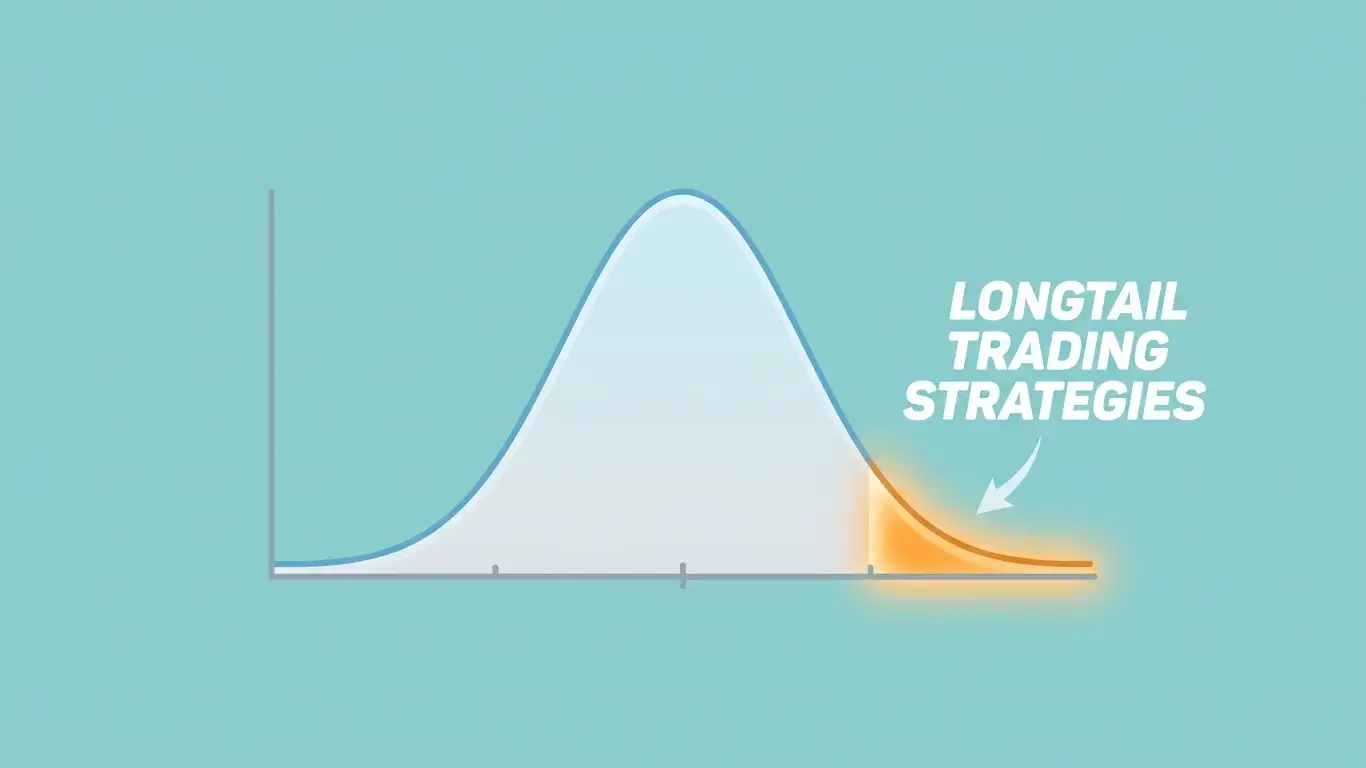
Long tail strategies focus on low-probability, high-payout contracts that the market may get wrong. It’s not about tossing a dice on wild guesses but finding where the crowd has barely looked at, and stepping in with better conviction.
In this article, we’ll go through:
- What long tail trading is and why it works
- The best markets to go after
- How to spot mispriced probabilities
- The risk-reward math behind these trades
- How to manage your bankroll
What is a long tail strategy
A long tail strategy deals with low implied probability, usually under 10%, where you believe the true odds are much higher. Say a contract that pays out if a regional war breaks out by year-end. The market has it sitting at 4% but you believe it’s closer to 12%. That gap is your edge.
The term comes from statistics, the “long tail” of a probability distribution, where rare events quietly pile up. These are not lottery tickets, though. The best long tail traders back up every position with deep research. The underlying logic is simple: markets are pretty good at pricing obvious outcomes, but they get complacent on anything uncertain.
Best markets for long tail trading
So where do you actually find these opportunities? A few categories stand out.
Geopolitical events are the richest hunting ground by far. Contracts on territorial disputes, leadership coups, or sudden sanctions tend to be priced by casual participants who are working off mainstream media. A trader who reads regional-language press or understands historical base rates can gain a serious edge here.
Scientific and regulatory outcomes are another strong category to look into. FDA approval timelines or experimental results are technical enough to put most people off. If you have domain knowledge in for example biotech or law, you can beat the crowd who is basically guessing.
Niche tech and cultural events such as a startup hitting a specific milestone or a platform canceling a major show may offer a long tail opportunity. These markets attract low volume and little scrutiny, which means prices can drift from reality for a long time before anyone notices.
How to find mispriced probabilities
Now that you know where to look, the core skill is calibration, figuring out what things actually cost in probability terms.
Start by building up a reference base. For any category, dig into the historical base rate:
- How often do incumbent leaders in a specific region lose power mid-term?
- How often does the WHO declare a Public Health Emergency in a given year?
These are public data, yet the vast majority of market participants haven’t bothered to look them up. From there, take into account current signals from news flow, satellite imagery, or whatever is relevant.
Remember, the goal isn’t to predict the future but to figure out whether the market’s probability is far off. A consistent 3 to 5 percentage point gap between your educated guess and the market price can compound into serious returns over time.
Tools like Metaculus’s community calibration scores and Good Judgment Open’s aggregated forecasts are all worth cross-referencing against live prices to sharpen your estimates.
Risk and reward dynamics
Here’s where long tail trading gets exciting and risky.
The appeal is pure asymmetry. Buy a YES contract at 5 cents that resolves at $1, and you’re looking at 20-to-1 odds. If your research has you right just 8% of the time on those trades, you’re turning a profit. The math works in your favor as long as you’re disciplined about how you pick your trades.
However, long tail positions can bleed for months. A geopolitical contract priced at 4% might never resolve YES, and your stake is gone. This is why long tail trading isn’t about individual bets. It’s about running a diversified portfolio of uncorrelated positions, each one backed by research rather than intuition.
Risk management
This is the part that separates traders who stick around from those who blow up after a bad quarter.
No single long tail position should eat up more than 2% of your total bankroll. Instead, you should spread bets across categories to keep correlation risk in check. If all your contracts depend on the same underlying trigger, say, a deterioration in U.S.–China relations, they’ll win or lose together, which completely defeats diversification.
Set a hard drawdown threshold. If your portfolio drops 20%, stop opening new positions and take a step back to reassess your methodology. Because something in your process has gone wrong, and trading more won’t fix it.
At last keep a detailed log of every trade and include your rationale on entry and the outcome. Over time, this skill-building will be your most valuable asset, improving your edge with every contract.
Wrapping up
Long tail in prediction markets can be an exciting strategy. Yet it demands research and patience because positions can sit underwater for weeks before paying off. For traders willing to put in the work, it offers something rare in other markets: true informational edge in places the crowd has overlooked.
You may be interested in these articles: